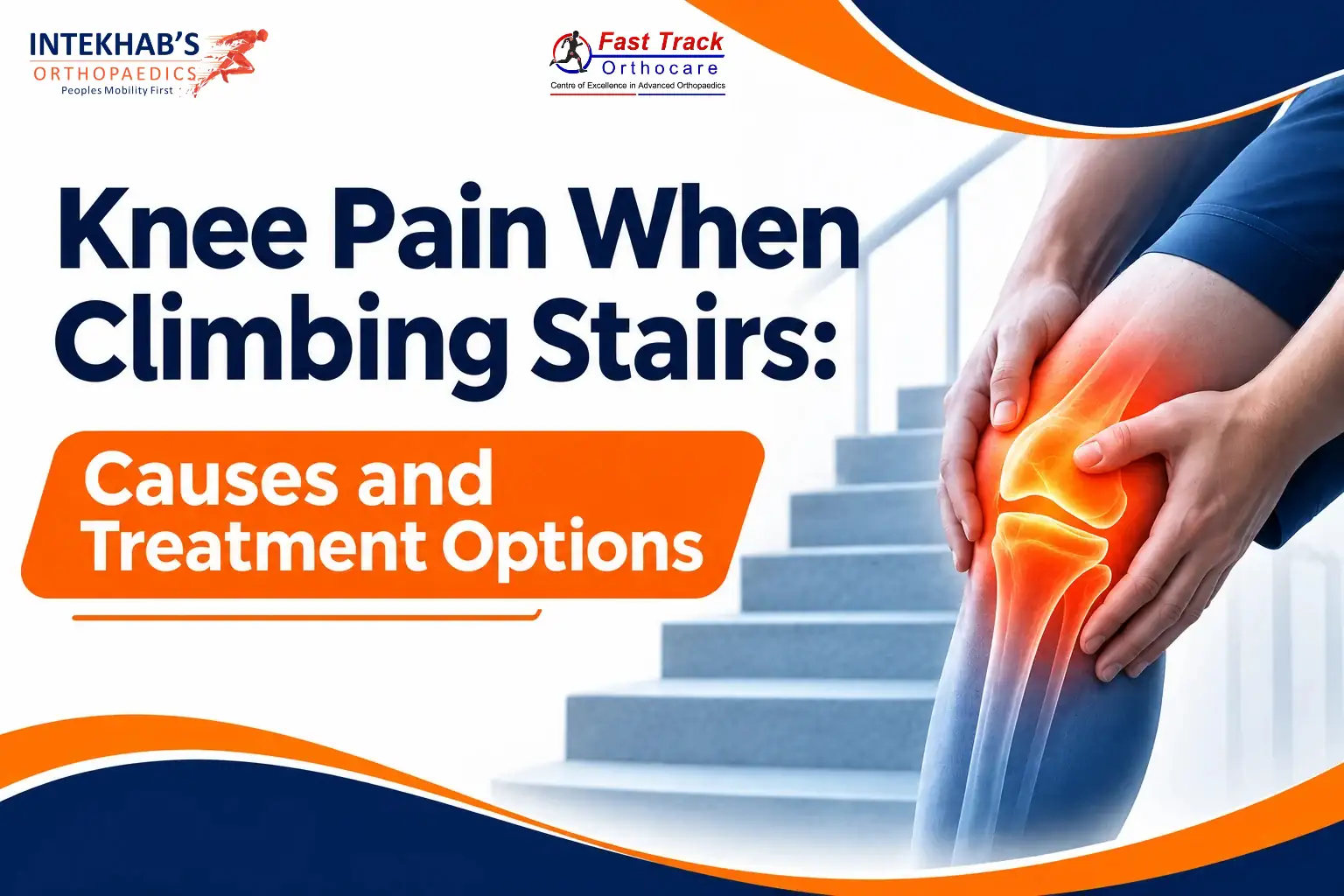
Knee Pain When Climbing Stairs commonly occurs due to knee osteoarthritis, cartilage damage, kneecap problems or muscle weakness. Treatment may include medication, physiotherapy, lifestyle changes or knee replacement surgery, depending on the underlying condition.
Why Does Knee Pain Occur When Climbing Stairs?
Climbing stairs puts additional pressure on your knee joints. When cartilage wears down or the surrounding muscles become weak, this pressure can cause pain, stiffness and discomfort. Some people experience pain while climbing upstairs, while others feel more discomfort when coming downstairs.
Understanding the underlying cause helps doctors recommend the right treatment.
Common Causes of Knee Pain When Climbing Stairs
Several knee conditions can make stair climbing painful.
1. Knee Osteoarthritis
Knee osteoarthritis develops when the protective cartilage gradually wears down. This increases friction within the joint and can cause pain, swelling and stiffness, especially during walking and stair climbing.
2. Patellofemoral Pain Syndrome
This condition causes pain around or behind the kneecap. Weak thigh muscles or abnormal kneecap movement can increase discomfort during stair climbing, squatting and bending.
3. Meniscus Injury
The meniscus cushions the knee joint. A sudden twist, sports injury or age-related degeneration can damage this cartilage, causing pain, swelling and difficulty moving the knee.
4. Muscle Weakness
Weak quadriceps and hip muscles provide less support to the knee joint. This can increase discomfort during activities that require repeated knee bending.
5. Ligament Injuries
Injuries to the ACL or MCL can cause knee pain, swelling and instability. These injuries may develop after sports activities, falls or sudden movements.
Symptoms You Should Not Ignore
Knee pain may develop gradually or appear after an injury. Common symptoms include:
Pain while climbing or descending stairs.
Swelling around the knee.
Stiffness after sitting.
Clicking or grinding sensations.
Difficulty bending or straightening the knee.
Pain during walking or standing.
Consult an orthopaedic specialist if these symptoms persist or affect your daily activities. Sudden severe pain, inability to bear weight, or a hot and swollen knee with fever requires prompt medical attention.
Treatment Options for Knee Pain
Treatment depends on the cause, severity of joint damage and the patient's overall health.
1. Medication and Lifestyle Changes
Doctors may recommend suitable pain-relief medication, weight management and activity modifications to reduce knee discomfort.
2. Physiotherapy
Targeted exercises strengthen the quadriceps, hamstrings and hip muscles. Physiotherapy can also improve flexibility, balance and joint stability.
3. Supportive Devices
A knee brace or walking stick may help selected patients manage discomfort and improve mobility.
4. Knee Replacement Surgery
When advanced knee arthritis causes persistent pain and limits everyday movement despite non-surgical treatment, knee replacement may become an option.
Dr. Intekhab Alam, a specialist orthopaedic and joint replacement surgeon in Lucknow with over 14+ years of experience, evaluates patients for appropriate surgical treatment at Fast Track Orthocare.
Surgical options and techniques include:
Total and Partial Knee Replacement: The procedure depends on the location and extent of cartilage damage.
High-Flex Implants: Selected implants are designed to support a greater range of knee bending.
Minimal Blood Loss Techniques: Surgical techniques aim to minimise blood loss.
Early Mobilisation: Suitable patients may walk with support as early as four hours after surgery, depending on their medical condition.
Revision Surgeries: Procedures to address complications or problems with an earlier knee replacement.
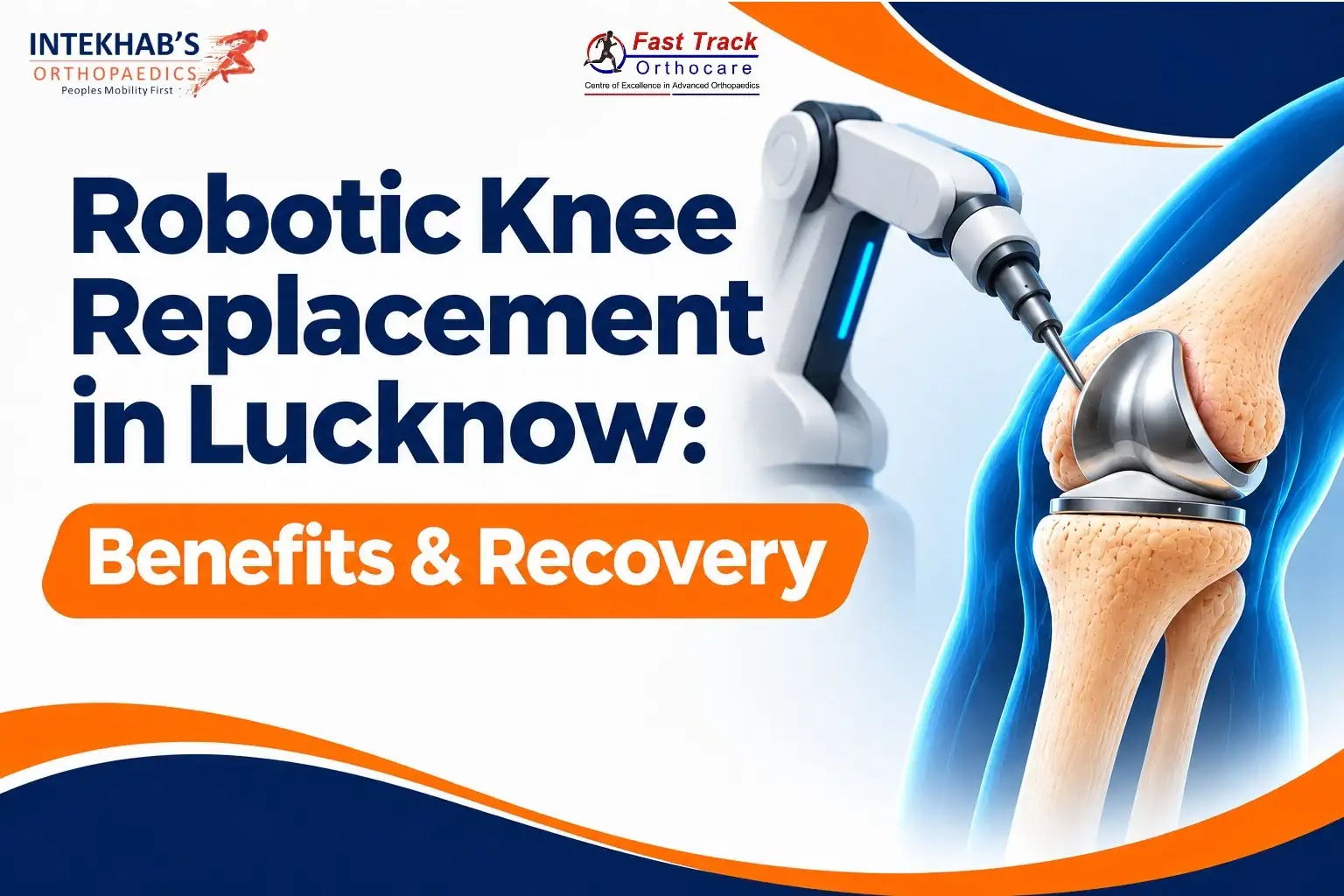
Computer-Assisted Surgery: Technology that helps surgeons plan and guide specific surgical steps.
The surgeon selects the appropriate procedure and implant after evaluating the patient's condition. Recovery and mobility outcomes vary from person to person.
When Should You Consult a Knee Replacement Surgeon in Lucknow?
Consider consulting an orthopaedic specialist if:
Knee pain continues despite medication or physiotherapy.
Arthritis makes walking and stair climbing difficult.
Knee stiffness affects your daily activities.
You experience recurring swelling or joint instability.
Knee pain affects your quality of life.
Early diagnosis helps identify the problem and allows doctors to discuss suitable treatment options.
Meet Dr. Intekhab Alam at Fast Track Orthocare
Dr. Intekhab Alam is a specialist Orthopaedic and Joint Replacement Surgeon in Lucknow with over 14+ years of experience. He is the Director of Fast Track Orthocare and treats patients with various orthopaedic and joint-related conditions.
His surgical expertise includes total and partial knee replacement, high-flex implants, revision surgeries, minimal blood loss techniques and computer-assisted procedures.
Patients receive an individual assessment and treatment recommendations based on their joint condition, medical history and mobility needs.
Book an appointment with Dr. Intekhab Alam at Fast Track Orthocare, Lucknow, for an orthopaedic consultation.
Frequently Asked Questions (FAQs)
1. Why does my knee hurt when climbing stairs?
Knee pain when climbing stairs can result from knee osteoarthritis, cartilage damage, kneecap problems (patellofemoral pain), or muscle weakness. An orthopaedic evaluation can help identify the underlying cause.
2. Is knee pain when climbing stairs a sign of arthritis?
Yes, knee pain while climbing stairs can be a symptom of knee osteoarthritis, particularly when accompanied by joint stiffness, swelling, or difficulty walking. However, other knee conditions can cause similar symptoms.
3. How can I reduce knee pain when climbing stairs?
You can manage knee pain through doctor-recommended exercises, weight management, activity modification, and appropriate treatment. Consult an orthopaedic specialist if the pain persists or affects daily activities.
4. When do I need knee replacement surgery?
Knee replacement surgery may be recommended when advanced knee arthritis causes persistent pain, stiffness, and restricted mobility despite appropriate non-surgical treatments.
5. How soon can I walk after knee replacement surgery?
Some patients can start walking with assistance within a few hours after knee replacement surgery. Recovery time depends on the patient's health, surgical technique, and rehabilitation progress.
Dr. Intekhab Alam
Specialist in robotic knee and hip joint replacement, arthroscopic ligament reconstruction and complex trauma fracture surgery, with 14+ years of clinical experience.
Book a consultation with Dr. Alam