A child's bones, joints and muscles develop continuously throughout childhood. However, persistent bone pain, difficulty walking, unusual leg alignment or repeated injuries may indicate an underlying orthopaedic problem. Consulting a qualified Paediatric Orthopaedic Surgeon in Lucknow can help parents understand these symptoms, identify possible conditions and explore appropriate treatment before they affect a child's growth and daily activities.
What Is Pediatric Orthopaedics?
Pediatric orthopaedics is a specialised branch of medicine that focuses on diagnosing and treating bone, joint, muscle and growth-related conditions in infants, children and teenagers. Children's bones are still developing, so their orthopaedic problems often require a different approach from adult conditions.
A child's growing bones contain growth plates that help determine their future length and shape. Injuries or certain medical conditions affecting these areas may interfere with normal development. An orthopaedic evaluation helps identify these concerns and determine whether observation, medication, physiotherapy or another treatment is appropriate.
Common Orthopaedic Problems in Children
Children may experience different bone and joint conditions as they grow. Some improve naturally, while others require medical attention.
1. Childhood Fractures and Bone Injuries
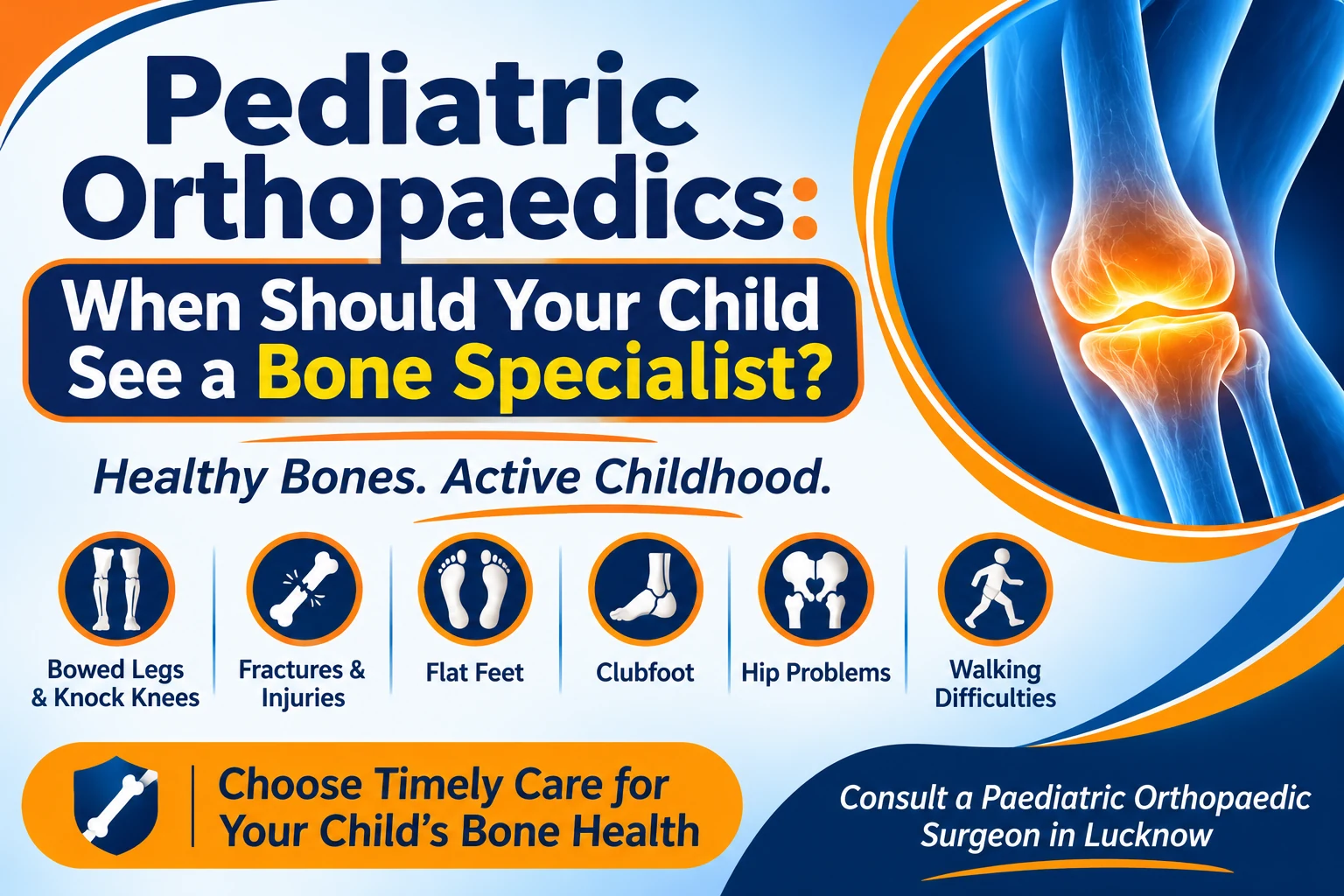
Children frequently experience falls and sports-related injuries while playing, running or participating in outdoor activities. A fracture may cause swelling, bruising, tenderness, pain or difficulty moving the affected limb. Some injuries can also affect the growth plate.
Parents should seek prompt medical evaluation if they suspect a fracture rather than attempting to straighten or reposition the injured limb at home.
2. Bowed Legs and Knock Knees
Bowed legs and knock knees are common during certain stages of childhood development. Many children gradually develop normal leg alignment without treatment. However, excessive bending, one-sided deformity, worsening alignment or persistent pain may require specialist evaluation.
3. Flat Feet and Walking Difficulties
Flat feet are common in young children because their foot arches develop gradually. In many cases, this is a normal developmental variation. However, parents should seek medical advice if their child experiences foot pain, stiffness, frequent tripping or difficulty participating in physical activities.
4. Joint Pain and Growth-Related Problems
Occasional discomfort can occur during childhood, but persistent joint pain should not automatically be considered growing pains. Pain accompanied by swelling, fever, restricted movement or limping requires medical assessment to identify the cause.
Warning Signs Your Child Needs a Bone Specialist
Recognising early symptoms can help parents seek appropriate medical attention. Consider an orthopaedic evaluation if your child experiences:
Persistent pain in the legs, knees, hips or joints.
Difficulty walking, running or climbing stairs.
Frequent falls or unexplained limping.
Visible changes in leg alignment or body posture.
Swelling or restricted joint movement.
Repeated fractures or injuries.
One limb appears shorter than the other.
Difficulty participating in normal physical activities.
Important: Sudden inability to bear weight, severe pain, fever with joint pain or significant injury requires urgent medical assessment. Do not delay emergency care.
When Should You Consult a Paediatric Orthopaedic Surgeon in Lucknow?
Parents should consider consulting an orthopaedic specialist when their child's symptoms persist, worsen or interfere with normal movement and development. Early assessment is particularly important when there is a suspected fracture, unusual bone alignment, growth-related deformity or restricted joint movement.
A Paediatric Orthopaedic Surgeon in Lucknow can help evaluate childhood bone and joint concerns and recommend an appropriate management plan based on the child's age, symptoms and medical history.
Parents should not rely on home remedies, corrective footwear or exercises without understanding the underlying problem. Some developmental variations require only observation, while other conditions need medical intervention.
How Are Childhood Orthopaedic Conditions Diagnosed?
Diagnosis begins with understanding the child's symptoms, medical history and physical development. During the consultation, the doctor may assess walking patterns, joint movement, limb alignment, muscle strength and areas of discomfort.
Depending on the suspected condition, diagnostic investigations may include:
X-rays: To evaluate fractures, bone alignment and certain growth-related abnormalities.
MRI: To examine soft tissues, cartilage, ligaments and selected bone conditions.
Blood tests: To investigate suspected infections, inflammation or nutritional deficiencies.
Not every child requires imaging or laboratory investigations. The doctor recommends tests according to clinical findings.
Treatment Options for Children's Bone and Joint Problems
Treatment depends on the child's age, diagnosis, severity of symptoms and stage of physical development. Many childhood orthopaedic conditions improve with monitoring and conservative care.
Possible treatment approaches include medication for appropriate conditions, casting or splinting for fractures, physiotherapy, activity modification and regular follow-up examinations. Certain deformities or complex injuries may require surgical treatment.
The objective is to support healthy bone development, restore comfortable movement and prevent complications whenever possible. Parents should follow the prescribed treatment plan and attend recommended follow-up appointments.
Why Early Orthopaedic Evaluation Matters
Children's bodies change rapidly during their growing years. An untreated fracture, persistent joint problem or progressive bone deformity may affect movement and physical development.
Early evaluation helps doctors distinguish normal developmental changes from conditions requiring treatment. It also gives parents clear information about their child's condition, available options and expected follow-up.
Seeking medical advice does not automatically mean that a child needs surgery. In many situations, reassurance and periodic monitoring are sufficient.
Consult Dr. Intekhab Alam for Orthopaedic Guidance in Lucknow
Parents looking for orthopaedic consultation in Lucknow can explore the services available at Fast Track Orthocare, under the care of Dr. Intekhab Alam, MS (Orthopaedics), an orthopaedic and joint replacement surgeon with over 14 years of experience.
Dr. Intekhab Alam focuses on orthopaedic conditions, fractures, joint problems and bone-related concerns. Fast Track Orthocare also lists paediatric orthopaedic services, including conditions such as clubfoot, developmental hip dysplasia and growth-plate injuries.
For children experiencing persistent pain, difficulty walking or suspected bone injuries, parents should confirm the availability of an appropriate paediatric orthopaedic assessment before scheduling a consultation.
Choosing timely medical guidance can help families understand the condition and make informed decisions about their child's bone and joint health.
Conclusion
A child's bone and joint health plays an important role in physical development, mobility and everyday activities. Although many childhood orthopaedic changes are normal, persistent pain, unusual walking patterns, swelling and progressive deformities should never be ignored.
If you notice these symptoms, seek professional medical advice rather than relying on self-treatment. An appropriate orthopaedic evaluation can help identify the problem and guide the next steps towards healthier growth and movement.
Frequently Asked Questions (FAQs)
1. When should a child visit an orthopaedic doctor?
A child should visit an orthopaedic doctor for persistent bone pain, limping, unusual leg alignment, repeated injuries or difficulty walking and participating in activities.
2. Who treats bone and joint problems in children?
A paediatric orthopaedic specialist evaluates childhood bone, joint and muscle conditions, including fractures, growth-related deformities, clubfoot and developmental hip problems.
3. Are bowed legs normal in young children?
Yes, bowed legs are common in toddlers and usually improve naturally. Severe, unequal or worsening curvature requires medical evaluation to identify possible underlying conditions.
4. Can childhood fractures affect bone growth?
Some fractures involving growth plates can affect normal bone development. Prompt diagnosis, appropriate treatment and follow-up help doctors monitor healing and identify potential complications.
5. Where can parents seek orthopaedic consultation in Lucknow?
Parents can consult Dr. Intekhab Alam at Fast Track Orthocare, Lucknow, and confirm the availability of appropriate paediatric orthopaedic assessment.
Dr. Intekhab Alam
Specialist in robotic knee and hip joint replacement, arthroscopic ligament reconstruction and complex trauma fracture surgery, with 14+ years of clinical experience.
Book a consultation with Dr. Alam