Introduction
Sports injuries treatment in Lucknow requires timely medical evaluation when pain, swelling, restricted movement, or joint instability develops after physical activity. Consulting an orthopaedic specialist like Dr. Intekhab Alam can help identify the injury, understand its severity, and plan appropriate treatment and rehabilitation.
Sports injuries can affect professional athletes, fitness enthusiasts, gym members, and people who play sports occasionally. Some injuries improve with rest and basic care, while others need medical attention to prevent further damage.
Understanding when to consult an orthopaedic specialist is important for protecting joint health, maintaining mobility, and returning to physical activities safely.
What Are Sports Injuries?
Sports injuries are physical injuries that occur during exercise, athletic activities, training sessions, or recreational sports. They commonly affect muscles, ligaments, tendons, bones, and joints.
These injuries may develop suddenly because of a fall, collision, or awkward movement. They can also develop gradually due to repetitive movements, excessive training, or inadequate recovery.
Common sports injuries include:
Ligament Injuries: Damage to the tissues connecting bones, including ACL and MCL injuries.
Muscle Strains: Stretching or tearing of muscle fibres during physical activity.
Meniscus Tears: Damage to the cartilage that cushions the knee joint.
Ankle Sprains: Stretching or tearing of ankle ligaments.
Tendon Injuries: Inflammation or damage caused by repetitive stress.
Fractures: Broken bones resulting from falls, direct impact, or excessive force.
Shoulder Injuries: Rotator cuff injuries and shoulder instability associated with sports movements.
Early assessment helps identify the type of injury and determine the appropriate treatment approach.
When Should You Consult an Orthopaedic Specialist for a Sports Injury?
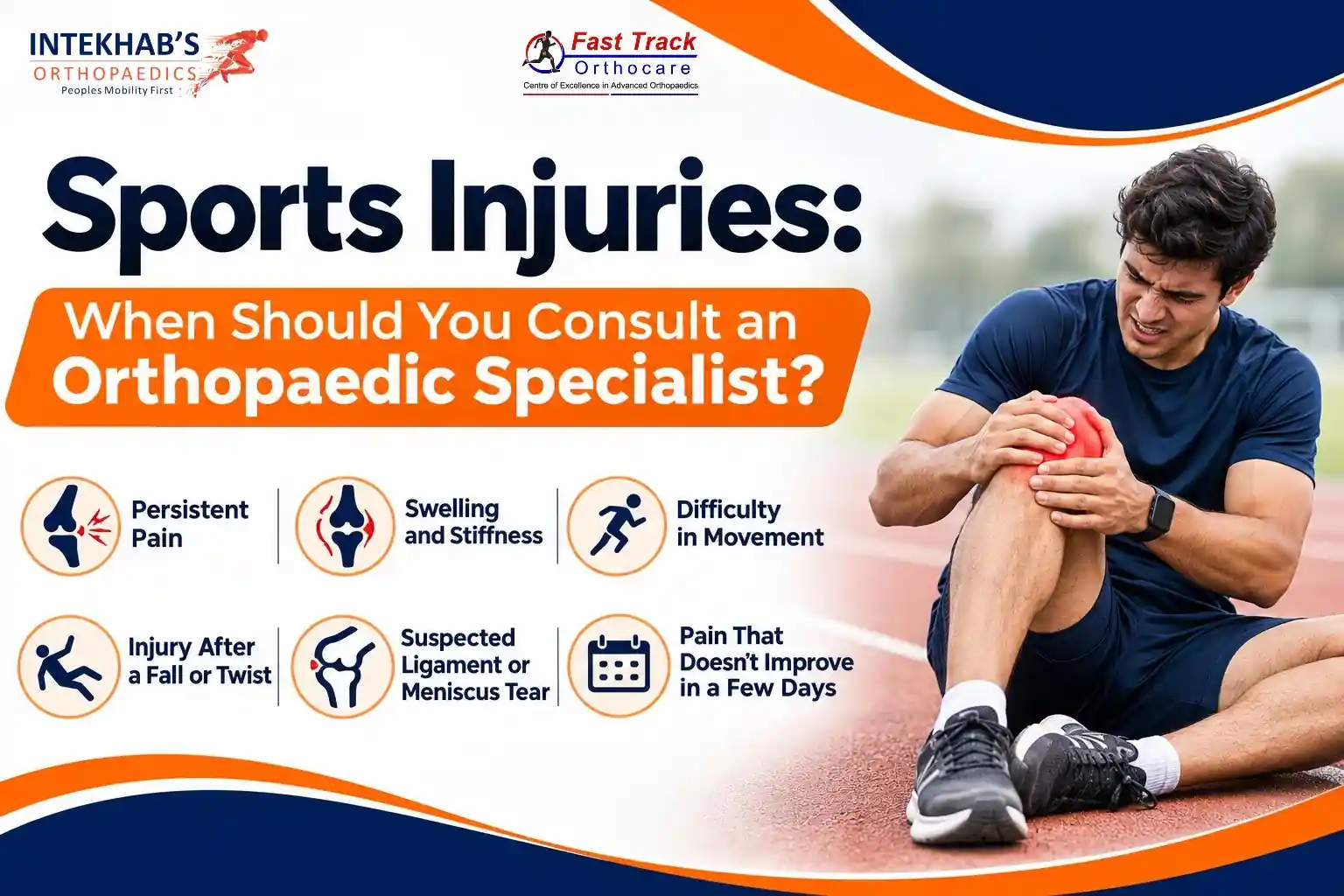
Not every sports injury requires specialist treatment. However, certain symptoms indicate that you should seek medical evaluation rather than continue exercising or playing through the pain.
1. Persistent Pain After Sports Activities
Muscle soreness after exercise is common. However, pain that continues for several days, becomes more intense, or returns whenever you exercise may indicate an underlying injury.
Persistent knee, shoulder, ankle, or elbow pain deserves proper evaluation. An orthopaedic specialist can assess the affected area and recommend further investigations when necessary.
2. Swelling Around a Joint
Sudden swelling after a sports activity may indicate ligament damage, cartilage injury, inflammation, or a fracture.
For example, swelling around the knee after twisting during football or badminton may indicate an ACL or meniscus injury.
Do not ignore significant swelling, especially when it occurs with pain or restricted movement.
3. Difficulty Walking or Moving a Joint
Difficulty putting weight on your leg, bending your knee, raising your arm, or moving a joint normally can indicate a significant injury.
An orthopaedic assessment can help identify whether the problem involves muscles, ligaments, tendons, bones, or joint structures.
Seek urgent medical attention if you cannot bear weight after an injury or suspect a fracture.
4. Joint Instability or Repeated Injuries
Does your knee feel like it may give way while walking, running, or changing direction?
Joint instability can occur after ligament injuries, particularly ACL injuries. Repeated ankle sprains or knee instability also require medical evaluation.
Ignoring these symptoms may increase the risk of further injury.
5. Limited Movement and Stiffness
Difficulty fully bending or straightening a joint after sports activity may indicate swelling, cartilage damage, muscle injury, or other joint problems.
An orthopaedic specialist can examine the affected joint and recommend suitable treatment, exercises, or rehabilitation.
Important: Seek immediate medical attention for visible deformity, severe pain, suspected fracture, numbness, or a cold or discoloured limb. Do not attempt to force the injured joint back into position.
Common Sports Injuries That Need Orthopaedic Evaluation
Understanding common injuries can help patients recognise when professional assessment is necessary.
ACL and Ligament Injuries
The anterior cruciate ligament (ACL) helps stabilise the knee. Sudden changes in direction, jumping, or awkward landings can damage this ligament.
Common symptoms include:
A popping sensation during injury.
Rapid knee swelling.
Difficulty walking.
Knee instability during movement.
Treatment depends on the severity of the injury, activity level, and individual needs. Some patients benefit from structured rehabilitation, while others may require surgical evaluation.
Meniscus Tears
The meniscus is a cartilage structure that absorbs shock inside the knee joint. Twisting movements during football, cricket, or badminton can cause a tear.
Patients may experience knee pain, swelling, stiffness, clicking, or difficulty fully straightening the knee.
An orthopaedic specialist can assess the injury and recommend appropriate management.
Ankle Sprains
An ankle sprain occurs when the ligaments supporting the ankle stretch or tear. It commonly happens when the foot twists during running, jumping, or landing.
Depending on the severity, treatment may include protection, activity modification, rehabilitation, and medical support.
Muscle and Tendon Injuries
Sudden acceleration, heavy exercise, or repetitive movements can cause muscle strains and tendon injuries.
Common symptoms include tenderness, pain during movement, swelling, and reduced strength. Proper diagnosis helps guide recovery and prevent repeated injuries.
How Are Sports Injuries Diagnosed?
Accurate diagnosis is the first step towards effective sports injury treatment. An orthopaedic specialist generally considers the patient's symptoms, injury history, physical activity, and examination findings.
The diagnostic process may include:
Medical History: Understanding how the injury occurred, when the pain started, and whether similar problems happened before.
Physical Examination: Checking joint movement, swelling, tenderness, muscle strength, and stability.
X-Ray: Identifying fractures, bone abnormalities, or certain joint-related problems.
MRI Scan: Evaluating soft tissues, including ligaments, tendons, cartilage, and muscles, when clinically required.
Not every patient needs an MRI or multiple investigations. The specialist recommends tests according to the symptoms and examination findings.
What Treatment Options Are Available for Sports Injuries?
Sports injuries treatment in Lucknow depends on the type of injury, its severity, the patient's age, activity level, and recovery goals.
Common treatment approaches include:
Rest and Activity Modification: Temporarily avoiding movements that increase pain or aggravate the injury.
Medication: Appropriate medicines may help manage pain and inflammation when prescribed by a doctor.
Physiotherapy: Guided exercises help improve flexibility, strength, balance, and joint movement.
Bracing and Support: Certain injuries may require temporary support to protect the affected joint.
Surgical Treatment: Severe ligament tears, certain fractures, or significant cartilage injuries may require surgical assessment.
Rehabilitation plays an important role in recovery. Returning to sports too early can increase the risk of reinjury.
Why Consult Dr. Intekhab Alam for Sports Injury Evaluation in Lucknow?
Dr. Intekhab Alam is an MS (Orthopaedics) specialist and Director of Fast Track Orthocare, Lucknow, with more than 14+ years of orthopaedic experience.
His orthopaedic practice includes the evaluation and management of bone, joint, ligament, and musculoskeletal conditions. Patients experiencing sports-related knee pain, joint injuries, ligament problems, or movement difficulties can seek an orthopaedic assessment to understand their condition and available treatment options.
At Fast Track Orthocare, the treatment approach focuses on:
Clinical evaluation of bone and joint conditions.
Assessment of knee injuries and ligament problems.
Individualised treatment recommendations.
Guidance on appropriate rehabilitation.
Follow-up assessment to monitor recovery.
Patients looking for the Best Sports Injury Doctor in Lucknow should consider the doctor's orthopaedic qualifications, clinical experience, diagnostic approach, and treatment planning.
A Sports Physiotherapist in Lucknow may also support recovery through supervised exercises, strength training, mobility work, and functional rehabilitation when recommended by the treating specialist.
How Can You Reduce the Risk of Sports Injuries?
Although every sports injury cannot be prevented, certain habits can reduce the risk:
Warm up before playing or exercising.
Increase workout intensity gradually.
Wear appropriate sports shoes and protective equipment.
Maintain proper exercise techniques.
Include strength and flexibility exercises in your routine.
Allow sufficient recovery time between intense sessions.
Avoid playing through significant pain or swelling.
Follow rehabilitation instructions before returning to sports.
Consistency, proper training techniques, and adequate recovery help support long-term joint and muscle health.
Frequently Asked Questions (FAQs)
1. When should I visit an orthopaedic doctor for a sports injury?
Consult an orthopaedic doctor if you experience persistent pain, swelling, joint instability, restricted movement, or difficulty walking after sports activities.
2. Who is the Best Sports Injury Doctor in Lucknow?
Patients can consult Dr. Intekhab Alam, MS (Orthopaedics), Director of Fast Track Orthocare, Lucknow, for orthopaedic evaluation of sports-related bone, joint, and ligament problems.
3. Can a sports injury heal without surgery?
Yes. Many sports injuries improve with appropriate medication, activity modification, physiotherapy, and rehabilitation. However, severe injuries may require surgical evaluation.
4. When should I consult a Sports Physiotherapist in Lucknow?
Consult a sports physiotherapist when your treating doctor recommends rehabilitation to improve muscle strength, flexibility, balance, joint movement, and functional recovery.
5. How can I find a Sports Injury Doctor Near Me in Lucknow?
Look for a qualified orthopaedic specialist with experience in bone, joint, and ligament conditions. Patients in Lucknow can contact Fast Track Orthocare to enquire about an appointment with Dr. Intekhab Alam.
Dr. Intekhab Alam
Sports injuries should not be ignored, particularly when pain, swelling, or restricted movement affects your daily activities. Early medical evaluation can help identify the underlying problem and guide appropriate treatment. If you are experiencing knee pain, ligament injuries, ankle problems, or other sports-related joint conditions, consult Dr. Intekhab Alam (MS Orthopaedics) at Fast Track Orthocare, Lucknow.
Book a consultation with Dr. Alam